Kremlin Signals Green Light for Trilateral Ukraine Peace Talks
Moscow has agreed to restart negotiations with Washington and Kyiv next month, marking a significant shift in diplomatic efforts to end the conflict.
By Camila Rodriguez ·
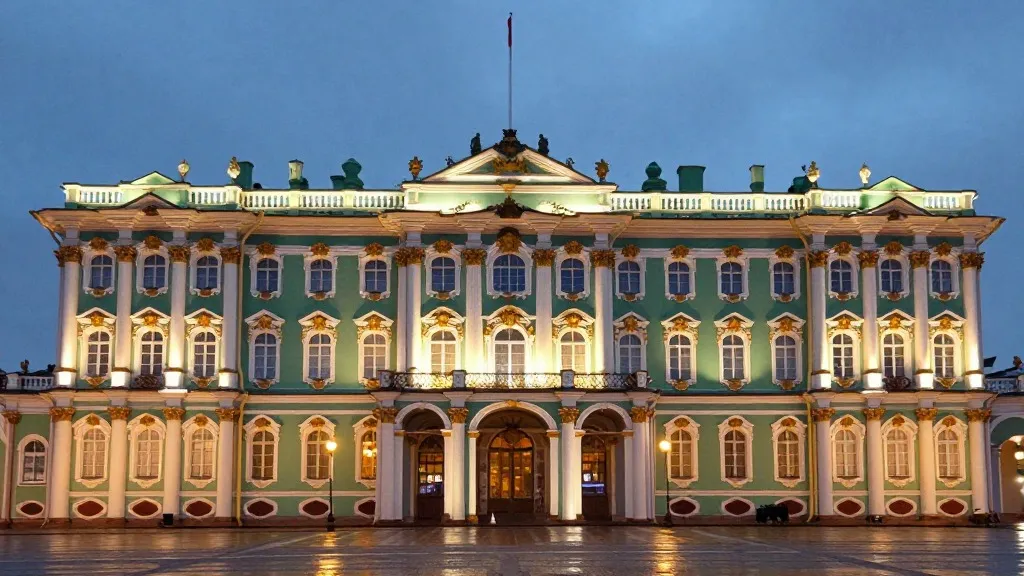
Russia has formally consented to resume trilateral peace negotiations with the United States and Ukraine, a development that could lead to the first substantive talks among the three powers since February. The Kremlin confirmed on Wednesday that President Vladimir Putin agreed in principle to restart the dialogue after November 10, following a high-level meeting in St. Petersburg with U.S. envoy Steve Witkoff.
Yuri Ushakov, Putin’s foreign affairs adviser, stated that the upcoming discussions will center on constructing a comprehensive security framework for both Russia and Ukraine once the hostilities cease. This agreement comes at a critical juncture as U.S. President Donald Trump intensifies pressure on Kyiv to finalize a deal that halts the fighting, while Ukrainian President Volodymyr Zelenskyy has expressed support for rapidly reinitiating the process.
In an audio message released late Wednesday, Zelenskyy outlined the objective of the talks as ending the war and preparing for a potential summit between national leaders. He noted that Russia has previously expressed readiness to meet in various formats, though prior attempts were canceled. "We’ll see what happens this time," Zelenskyy said, adding that the agenda is clear: to bring peace closer. Shortly after his statement, a missile alert sounded over Kyiv, accompanied by loud explosions in the capital.
The St. Petersburg discussions, which lasted approximately three hours, took place the day after Witkoff met with Zelenskyy and several European leaders in Oslo. Ushakov characterized the proposals emerging from the Oslo meeting as containing "little of real value" in resolving the crisis, though he later conceded on Russian state television that they represented a step in the right direction, even if Moscow was not fully satisfied. The earlier rounds of negotiations in January and February yielded limited progress beyond prisoner exchanges, as both sides maintained their fundamental positions.
According to a U.S. official familiar with the private meeting, Witkoff and Jared Kushner, Trump’s son-in-law, proposed the three-way technical-level meeting during the St. Petersburg session. They also shared updates on their previous consultations with Zelenskyy and discussed a postwar economic plan alongside European security arrangements. Ushakov said that large-scale joint economic projects between Russia and the U.S., some nearing implementation, were discussed in detail.
In televised remarks, Putin indicated his willingness to consider restoring economic ties with the United States and to discuss the U.S.-led conflict in Iran. He suggested that Moscow could leverage its relationship with Tehran to facilitate peace. Additionally, Putin and Witkoff explored the possibility of a trilateral economic summit in China next month, involving Russian, Chinese, and U.S. leaders, with Beijing reportedly already preparing for the event. Putin also met with Chinese Premier Li Qiang during the same period in St. Petersburg.
The diplomatic push coincides with renewed military intensity. Overnight Russian strikes on Kyiv and three other cities targeted energy facilities, resulting in three deaths and 12 injuries in the capital, according to the city’s military administration. Ukrainian Prime Minister Serhii Koretskyi reported that two more people died and 11 were wounded in Kharkiv when drones hit a residential area. The Russian Defense Ministry claimed its forces struck a warehouse, an electrical substation, and a bulk carrier headed for Odesa, and that air defenses intercepted 373 Ukrainian drones across multiple regions and the Black Sea.
Back in Oslo, Witkoff met with Norwegian Prime Minister Jonas Gahr Støre for over an hour before departing for the U.S. Støre suggested that Russia is now seeking diplomatic opportunities, predicting the new talks would occur in mid-November. When asked if Zelenskyy would accept a border along the current front line, Støre remarked that while Ukraine might not formally accept it, it could potentially live with such an arrangement. Meanwhile, in the White House, Trump reiterated his demand for Zelenskyy to make a deal, stating that the U.S. has given much to Ukraine and received little in return.
In a gesture of goodwill, Russia released Stephen Hubbard, a retired American teacher imprisoned on mercenary charges, after Trump requested his freedom. This development underscores the broader diplomatic maneuvers as both sides attempt to find common ground after more than four and a half years of war.
Source: Atlanta News First