NHTSA Proposes Cyan Lights to Identify Driverless Vehicles on U.S. Roads
Federal regulators are seeking to standardize a blue-green marker lamp for autonomous cars while removing obsolete interior control requirements.
By Jasmine Coleman ·
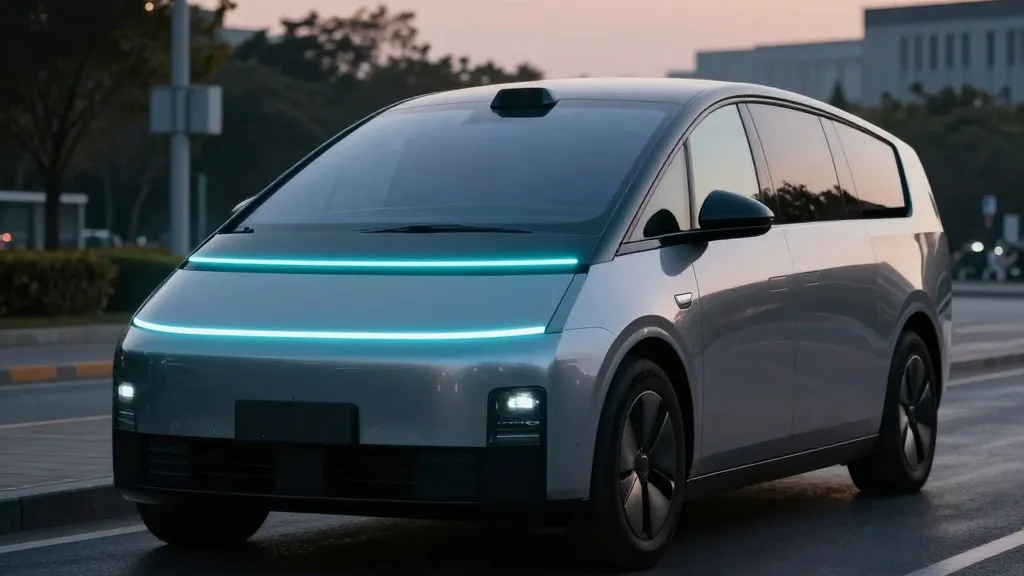
The National Highway Traffic Safety Administration has proposed a federal standard requiring driverless vehicles to use distinctive cyan-colored lights to indicate that an automated driving system is in control. This regulatory move aims to resolve years of industry debate regarding how robotaxis should visually communicate their status to pedestrians, other drivers, and law enforcement. By establishing a uniform signal, the agency seeks to create a clear visual language for the growing number of human-free vehicles entering public roads.
The proposal involves amending Federal Motor Vehicle Safety Standard No. 108, which governs lighting equipment on motor vehicles. NHTSA suggests adding cyan marker lamps specifically designed to signal when a vehicle is operating without a human driver. The agency selected this blue-green hue because it occupies a visual gap in current automotive lighting standards. Existing regulations already reserve red, amber, white, and flashing blue or red lights for functions such as braking, turning, illumination, and emergency services. Cyan offers a distinct alternative that reduces the risk of confusion among road users.
Industry precedent supports the viability of this color choice. Mercedes-Benz previously received state-level approval to use turquoise lights for its Level 3 Drive Pilot system, although the automaker later abandoned that specific project in favor of a different approach. Despite this shift, NHTSA intends to create a national framework that major players in the autonomous vehicle sector, including Waymo, Nuro, Zoox, GM, and Mercedes, can adopt. The goal is to prevent a fragmented landscape where different companies use varying colors and signals, which could confuse drivers accustomed to traditional vehicle cues.
Under the proposed rule, the installation of cyan marker lights would remain optional for manufacturers. However, if an automaker chooses to include them, the vehicle must comply with specific federal standards regarding color, brightness, and placement. This ensures that any compliant vehicle presents a consistent and legally recognized signal. The agency argues that standardizing these elements will make it easier for the general public to recognize and react to autonomous vehicles, thereby enhancing overall traffic safety.
In addition to introducing new signals, NHTSA is proposing to eliminate several lighting requirements that are impractical for vehicles without human occupants. Current regulations mandate the presence of physical hazard switches, manual beam shifters, and turn levers inside the cabin. The agency believes these controls are unnecessary for fully autonomous designs and proposes removing them to simplify vehicle architecture. Furthermore, NHTSA is updating the 12.8-volt testing standard to accommodate modern LED lighting technologies, reducing administrative burdens for manufacturers building with contemporary components.
The agency is also reconsidering rules that dictate the physical positioning of high-beam and low-beam lights relative to one another. By relaxing these spatial requirements, NHTSA allows automakers more design flexibility. These changes are part of a broader Department of Transportation initiative to streamline the deployment of autonomous vehicles. The overarching goal is to facilitate the creation of cars designed specifically for autonomous operation, potentially removing traditional human-centric controls such as steering wheels and pedals from future models.
While the proposal aims to ease regulatory hurdles, NHTSA continues to enforce existing standards strictly. Last month, the agency opened an audit query into the Tesla Cybercab to review the technical data and processes Tesla used during its certification. The inquiry focuses on the vehicle's lack of certain design features, including sideview mirrors, pedals, and a steering wheel, which are currently required under FMVSS. This simultaneous push for new standards and rigorous enforcement of old ones highlights the complex transition period as the regulatory framework adapts to driverless technology.
The next steps involve a public comment period, during which stakeholders can review the proposed changes and submit feedback. Once the rulemaking process is complete, NHTSA will finalize the amendments to FMVSS No. 108. This finalization will provide the legal foundation for the widespread use of cyan marker lights and other streamlined lighting configurations, marking a significant step in the integration of autonomous vehicles into the national transportation infrastructure.
Source: The Verge